THE REAL-LIFE PROBLEM
What this guide helps you do Recipes, guest needs, timing, drinks, and table ideas often live in separate places, leaving one person to hold the whole gathering together.
WHEN THIS HELPS
Use it when you have some gathering details and want one calm plan that connects the menu, shopping, schedule, drinks, and table.
WHEN TO SKIP IT
Skip it for a very small spontaneous meal, or when allergy, food-safety, accessibility, or venue decisions require direct expert guidance.
! Privacy note Describe dietary needs without including a guest's name or private medical details. Do not paste addresses, payment information, or anything you do not have permission to share.
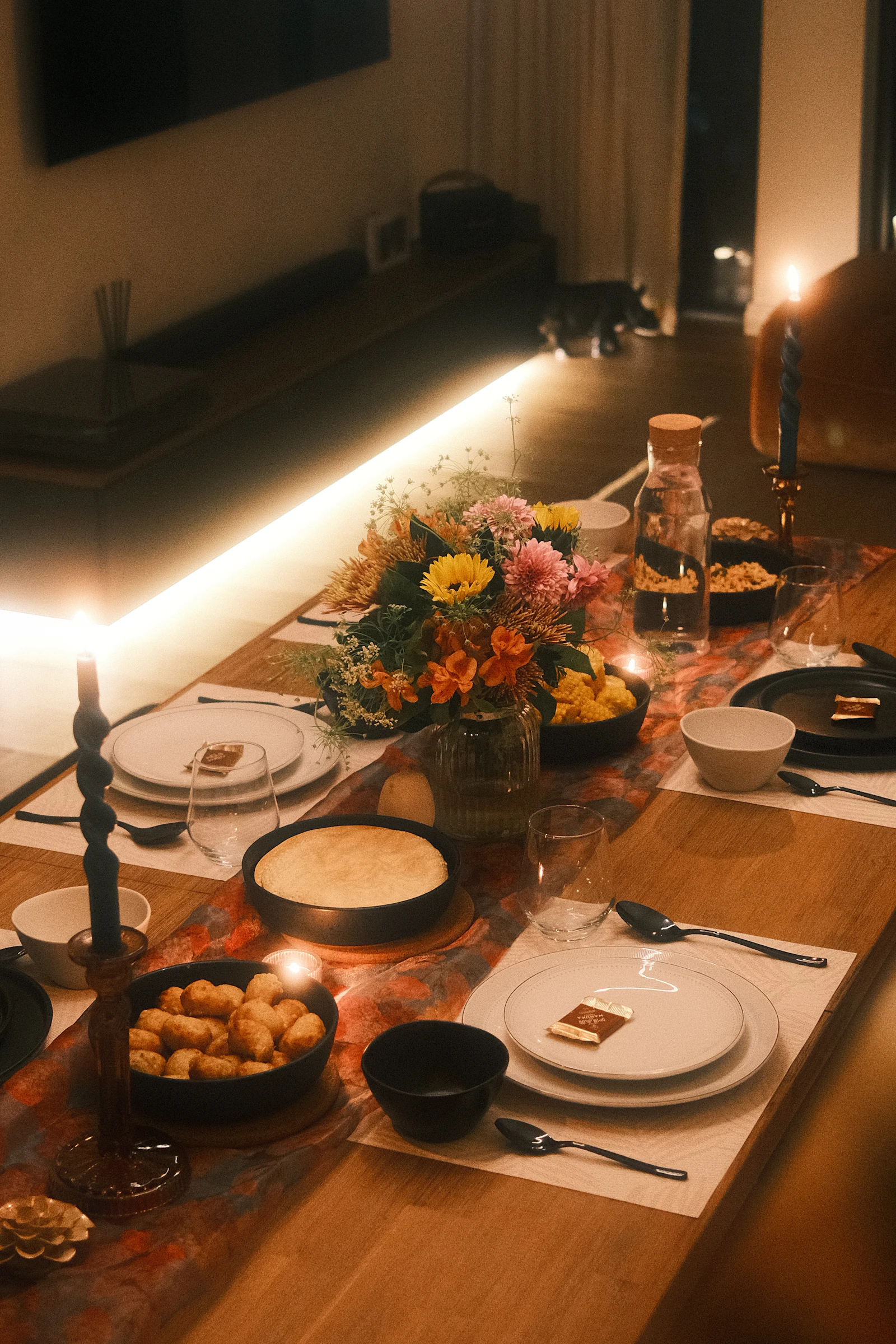
A useful plan should leave room for the part people remember: gathering at the table. Photo by Mounish Raja via Unsplash. How to use it 1 Tell us what you know Recipes, guests, timing, preferences, and constraints.
2 Let AI interview you It asks about the important pieces you have not decided.
3 Receive one usable plan Menu, shopping, preparation, table, drinks, and checks.
Works with free ChatGPT Choose the Simple plan and paste the prompt into an ordinary chat. No file upload, Project, custom GPT, paid model, or deep research is required. Free accounts have lower usage limits, so optional live shopping research may need to wait or be done separately. See current Free plan information. Start with what you know You do not need every answer. “Help me decide” is a perfectly good starting point.
YOUR GATHERING-PLANNING PROMPT
Ready for your AI tool Copy prompt CONTEXT
I am planning a dinner gathering. My preferences and judgment come first.
HERE IS WHAT I KNOW
- Meal or gathering type: Dinner
- Planning depth: Simple plan
- Guests: 10
- Date: Not decided yet
- Time I want to serve the meal: Not decided yet
- Occasion: Not decided yet
- Feeling I want: Relaxed and thoughtful
- Recipes, menu ideas, or links I am considering:
I have not added them yet
- Recipe help I want: Use my recipes and fill any menu gaps
- Dietary needs or strong preferences: None provided yet
- Approximate budget: Not decided yet
- Drinks selected: Help me decide
- Serving style: Help me decide
- Table-setting ideas selected: Help me decide
- Table colors, flowers, or decorating ideas I already have: Not decided yet
- Kitchen, timing, mobility, or other constraints: None provided yet
ROLE
Act as my calm gathering-planning partner. Help me turn what I know into a realistic plan without inventing recipe details, sources, prices, or decisions.
INTERVIEW
1. Do not create the full plan immediately.
2. First, briefly repeat what you understand. Then ask me only the questions you truly need answered. Ask no more than five questions at a time.
3. If I have not decided something, such as drinks, serving style, side dishes, or dessert, offer two or three sensible choices with short tradeoffs. Do not overwhelm me with a long list.
4. If I left the recipe box blank or asked you to fill menu gaps, suggest suitable published recipes, not just dish ideas. For every suggestion, give me the recipe title, publisher or creator, a direct working recipe link, stated yield, stated preparation and cooking time, and a concise summary of the key ingredients. Explain why it fits this gathering. Do not invent a source, link, yield, ingredient list, or timing.
5. If you cannot browse the web, open a recipe link, or verify its details, tell me immediately. Give me useful search terms or ask me to paste the recipe details. Do not turn an unverified menu idea into exact quantities, temperatures, timings, or a shopping list.
6. Treat dietary restrictions carefully. Do not assume that swapping one ingredient, such as using one-to-one gluten-free flour, automatically makes a recipe safe or successful. Ask whether the original publisher provides a tested variation. Otherwise, offer a separate verified option and flag cross-contact concerns for me to check with the guest.
7. Keep the original recipe names, creators, and links attached to the plan. Summarize rather than reproducing someone else's full directions, and do not rewrite a recipe as if it were mine.
8. Before making the final plan, confirm the menu, guest count, serving time, dietary needs, and any decisions we made together.
9. You must ask me about serving style, the table, and flowers before you make the final plan, unless I explicitly say I do not want help with them. Confirm what linens, dishes, glassware, and serving pieces I own; my colors; centerpiece scale; candles; and anything that must be bought, rented, or ordered. Keep centerpieces low enough for conversation. If I chose a formal florist arrangement, ask about flower budget, size, quantity, pickup or delivery, and the order-by date. If I selected "Help me decide," do not silently choose for me.
10. Treat drink choices as mix-and-match. Confirm which selected drinks I actually want, add appealing nonalcoholic options, and check chilling, ice, glassware, garnish, and serving-station needs. Do not assume that two guests who do not drink alcohol are the only people who will choose nonalcoholic drinks.
11. Do not require file uploads, a Project, a custom GPT, a paid model, or deep research. Work in an ordinary chat. Recipe research is required only when I ask you to suggest recipes. Live product, price, store, or wine research is optional and should only happen if I ask for it.
TASK
WHEN I CONFIRM THAT I AM READY, CREATE ONE GATHERING PLAN WITH
- the confirmed menu and original recipe links
- recipe quantities adjusted for the guest count, with uncertain amounts clearly flagged
- one combined shopping list organized by store section
- a make-ahead plan for the days before
- a day-of timeline working backward from serving time
- the important oven, stovetop, refrigerator, and serving-dish conflicts
- drink quantities and nonalcoholic choices
- the table, flowers, candles, and serving style we discussed, using what I already have where possible
- a short hosting checklist for the final hour
- any food-safety, allergy, timing, or equipment items I must personally verify
- a short list of open decisions, if anything remains unresolved
If the planning depth is “Simple plan,” keep the complete plan under about 1,200 words. Focus on the decisions, shopping list, preparation schedule, table and flowers, and essential checks. Offer detailed kitchen scheduling, budgeting, or live shopping research only as optional follow-up help.
If the planning depth is “Detailed plan,” include the fuller kitchen and equipment plan, but divide a very long answer into two parts and wait for me before continuing.
Keep the plan calm, practical, and easy to print. Separate confirmed facts, my choices, your suggestions, and anything that still needs verification.
Ideas are not recipes If AI recommends the food, the prompt now requires real published recipes with direct links and verified details. It should not turn an attractive menu idea into exact quantities, oven temperatures, or a shopping list until the sources are confirmed.
BEFORE YOU ACT
Check these before the invitations go out Confirm allergies and dietary needs directly with your guests. Check recipe yields, cooking temperatures, and food-safety guidance against the original recipes and reliable official sources. Make sure every recipe creator and original link remain attached to your private plan. If a suggested recipe has no working source link, treat it as an idea, not a recipe. Confirm that the oven schedule, serving dishes, refrigerator space, and table seating work in your actual home. Treat drink quantities and pairings as suggestions, then adjust them for your guests. Your entries stay in this browser page only long enough to build the prompt. This version does not save or send the information to Considered.
KEEP HUMAN JUDGMENT VISIBLE
AI can help. You still decide. AI can organize the plan and surface conflicts. You decide what your guests need, which recipes are dependable, what fits your home, and what should be confirmed directly.